Sobia
Sobia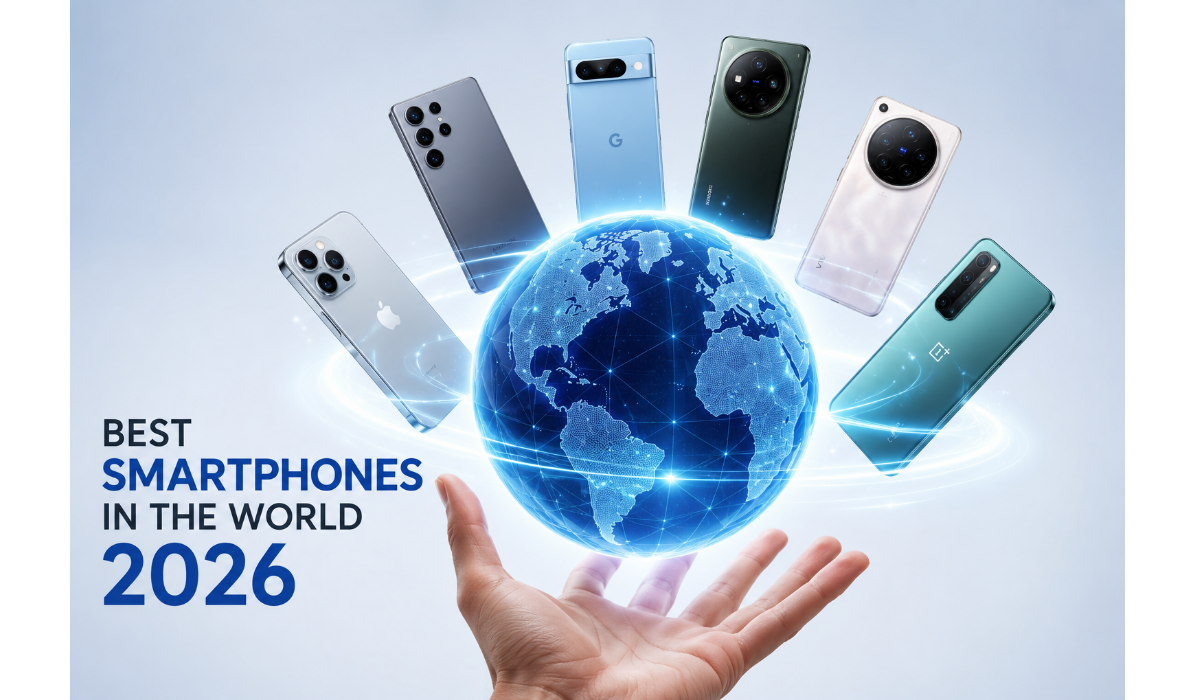
If you’re searching for the best smartphones 2026, you’re in the right place. This guide compares the latest flagship phones from Samsung, Apple, Google, OnePlus, OPPO, Vivo, Xiaomi, HONOR, and ASUS based on camera quality, display, performance, battery life, AI features, software support, and overall value. Whether you’re looking for the best smartphones 2026 for gaming, photography, content creation, or everyday use, this guide will help you choose the right phone with confidence.
Introduction
The smartphone industry has reached an exciting new level in 2026. Artificial intelligence, next-generation processors, professional-grade cameras, brighter AMOLED displays, and longer software support have transformed modern smartphones into powerful tools for work, creativity, entertainment, and everyday life. However, with so many premium flagship devices available, choosing the right smartphone has become more difficult than ever.
This comprehensive guide to the Best Smartphones in the World 2026 is designed to simplify your decision. Instead of relying on marketing claims, we compare the world’s leading flagship smartphones using official specifications, real-world performance, camera capabilities, battery endurance, display quality, gaming performance, AI features, software experience, durability, and overall value for money.
Our comparison includes flagship models from Samsung, Apple, Google, OnePlus, Xiaomi, OPPO, Vivo, HONOR, and ASUS. Each smartphone has been carefully evaluated to help every type of user—from photographers and gamers to professionals, students, and everyday consumers—find the device that best fits their needs.
Whether you’re upgrading from an older phone or investing in a premium flagship for the first time, this guide provides clear comparisons, expert recommendations, and practical buying advice. By the end of this article, you’ll know which smartphone offers the best camera, the strongest performance, the longest battery life, and the best overall experience in 2026.
If you’re looking for more affordable options, check out our guide to the Best Smartphones Under $500 in 2026
How We Selected These Smartphones
Choosing the best smartphone in 2026 isn’t just about selecting the most expensive device. Every smartphone in this guide was evaluated using objective criteria based on official specifications, software experience, real-world usability, and long-term value.
To ensure accuracy, we reviewed information from official manufacturer websites and compared each flagship phone across the factors that matter most to everyday users.
We considered the following factors:
- Camera performance (daylight, night mode, zoom, selfie, and video recording)
- Display quality (brightness, refresh rate, resolution, and color accuracy)
- Processor performance for gaming and multitasking
- Battery capacity and charging speed
- AI-powered features and smart software tools
- Build quality and durability
- Software updates and long-term security support
- Value for money
- Overall user experience
Whether you’re a gamer, content creator, business professional, student, or casual user, these recommendations are designed to help you choose the right smartphone based on your specific needs.
Quick Comparison Table
| Smart Phone | Display | Processr | Main Camera | Battery | Charging | Best For |
|---|---|---|---|---|---|---|
| Samsung Galaxy S26 Ultra | 6.9″ Dynamic AMOLED 2X | Deca-Core | 200MP | 5000mAh | Fast Charging | Overall Best |
| Samsung Galaxy S26+ | 6.7″ AMOLED | Deca-Core | 50MP | 4900mAh | Fast Charging | Balanced Flagship |
| Apple iPhone 17 Pro Max | Super Retina XDR | Apple A20 Pro | 48MP | Excellent | USB-C Fast Charging | iOS Users |
| Google Pixel 11 Pro | LTPO OLED | Tensor G6 | 50MP | 5100mAh | Fast Charging | AI Photography |
| OnePlus 15 | AMOLED 165Hz | Snapdragon 8 Elite Gen 5 | 50MP Triple | 7300mAh | 80W | Performance |
| Xiaomi 16 Ultra | AMOLED | Snapdragon 8 Elite | Leica Camera | 6000mAh | 120W | Photography |
| OPPO Reno15 5G | AMOLED 120Hz | Snapdragon 7 Gen 4 | 50MP Triple | 6500mAh | 80W | Battery & Camera |
| Vivo X300 Pro | AMOLED | MediaTek Dimensity Flagship | ZEISS Camera | 6000mAh+ | Fast Charging | Portrait Photography |
| HONOR Magic 9 Pro | OLED | Snapdragon Flagship | Triple Camera | 6000mAh | 100W | AI Experience |
| ASUS ROG Phone 10 | AMOLED 165Hz | Snapdragon Flagship | 50MP | 6500mAh | 65W | Gaming |
Samsung Galaxy S26 Ultra – Best Overall Smartphone
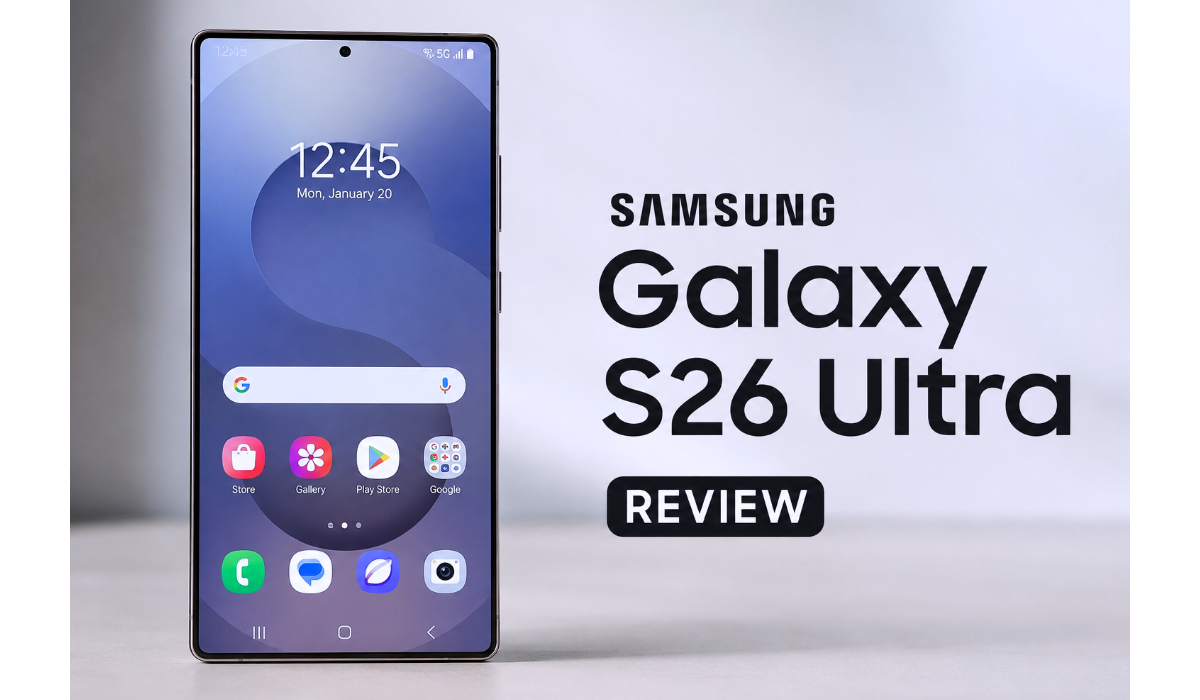
The Samsung Galaxy S26 Ultra is our top overall recommendation for users who want a premium flagship smartphone with a strong combination of performance, camera quality, display technology, AI features, and long-term usability. Samsung combines its latest Snapdragon 8 Elite Gen 5 for Galaxy processor with a 6.9-inch QHD+ Dynamic AMOLED 2X display, a 200MP main camera system, a 5,000mAh battery, and built-in Galaxy AI features.
For readers who want a more detailed look at Samsung’s flagship, you can also read our Samsung Galaxy S26 Ultra Review.
Why We Recommend It
- Excellent overall flagship performance
- High-resolution 200MP main camera
- Versatile telephoto and ultrawide camera system
- 6.9-inch QHD+ Dynamic AMOLED 2X display
- Powerful Galaxy AI features
- Built-in Privacy Display
- S Pen support
- Large 5,000mAh battery
- Up to 1TB of storage
- Strong option for photography, gaming, productivity, and everyday use
Key Specifications
| Feature | Samsung Galaxy S26 Ultra |
|---|---|
| Display | 6.9-inch QHD+ Dynamic AMOLED 2X |
| Refresh Rate | Up to 120Hz |
| Processor | Snapdragon 8 Elite Gen 5 for Galaxy |
| Main Camera | 200MP Wide |
| Telephoto | 50MP |
| Ultra-Wide | 50MP |
| Front Camera | 12MP |
| Battery | 5,000mAh |
| Storage | 256GB, 512GB, up to 1TB |
| S Pen | Supported |
| Video | Up to 8K at 30fps |
Samsung’s official specifications list the 200MP wide camera, 50MP telephoto, 50MP ultrawide, 12MP front camera and up to 100x digital zoom.
Design and Display
The Galaxy S26 Ultra combines a premium design with a large 6.9-inch Dynamic AMOLED 2X display. Its QHD+ resolution and adaptive refresh rate of up to 120Hz are designed to provide sharp visuals and smooth scrolling for everyday use, video streaming, productivity, and gaming. Samsung also highlights its built-in Privacy Display, which is designed to make screen content less visible from side viewing angles in public places.
The phone measures 163.6 × 78.1 × 7.9mm and weighs 214g according to Samsung’s specifications.
Performance
Performance is one of the Galaxy S26 Ultra’s strongest areas. It uses the Snapdragon 8 Elite Gen 5 for Galaxy, a customized processor designed to improve CPU, GPU, and NPU performance.
Samsung says the customized processor provides a 39% improvement in NPU performance, 24% greater graphics processing, and 19% faster CPU processing compared with the Galaxy S25 Ultra. The phone also uses an enhanced Vapor Chamber cooling system for sustained performance during demanding workloads.
This makes the Galaxy S26 Ultra suitable for demanding apps, multitasking, high-end mobile gaming, photo editing, and AI-powered features.
Internal-link opportunity: If your website has a dedicated gaming-phone article, you can link the phrase “high-end mobile gaming” to your Best Gaming Phones 2026 article.
Camera System
Camera performance is another major strength of the Galaxy S26 Ultra. The rear camera setup includes a 200MP wide camera, a 50MP ultrawide camera, a 50MP telephoto camera, and a 10MP telephoto camera. Samsung also lists optical and optical-quality zoom options, with digital zoom reaching up to 100x.
The 200MP main camera uses an F1.4 aperture, while the 50MP telephoto camera uses an F2.9 aperture. Samsung also highlights improvements to low-light video through its Nightography system.
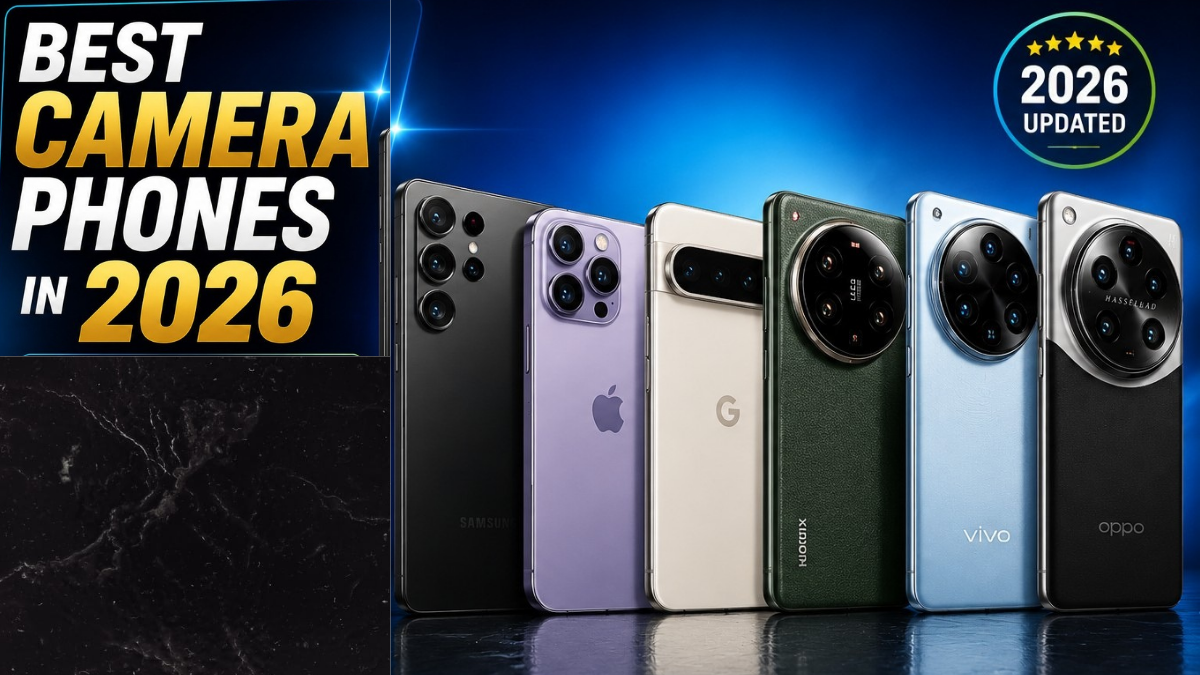
If you want to compare this phone with other camera-focused devices, explore our guide to the Best Camera Phones in 2026.
For complete specifications and Samsung’s official product information, visit the Samsung Galaxy S26 Ultra official page.
Battery and Charging
The Galaxy S26 Ultra includes a 5,000mAh typical battery capacity. Samsung states that the phone can provide up 31 hours of video playback, while its Super Fast Charging 3.0 system can reach up to 75% charge in around 30 minutes under Samsung’s stated conditions.
This makes it a strong option for users who spend long periods watching videos, gaming, working, or using demanding applications
This makes it a strong option for users who spend long periods watching videos, gaming, working, or using demanding applications.
Galaxy AI and Smart Features
AI is an important part of the Galaxy S26 Ultra experience. Samsung highlights features such as Photo Assist, which allows users to make photo-editing requests using natural-language prompts. The customized processor is also designed to support AI processing through its improved NPU.
If your article already contains a separate section about AI smartphones, you can link the phrase “AI-powered features” to your Best AI Smartphones article.
The phone also introduces a built-in Privacy Display designed to help protect on-screen information when using the phone in public.
Storage Options
Samsung offers the Galaxy S26 Ultra in 256GB, 512GB, and 1TB storage configurations. The 1TB version comes with 16GB of memory, while the 256GB and 512GB options are listed with 12GB of memory. Availability can vary by country or region.
Pros and Cons
Pros
- Excellent flagship performance
- Versatile 200MP camera system
- Strong zoom capabilities
- Large QHD+ AMOLED display
- Advanced Galaxy AI features
- S Pen support
- Large 5,000mAh battery
- Up to 1TB storage
- Built-in Privacy Display
Cons
- Large size may not suit everyone
- Premium flagship pricing
- Some advanced features may be more useful to power users
Who Should Buy the Samsung Galaxy S26 Ultra?
The Galaxy S26 Ultra is best suited to users who want an all-around premium flagship smartphone rather than a device focused on only one feature. It is particularly suitable for photographers, content creators, gamers, professionals, and users who want a large high-resolution display with advanced AI capabilities.
If you want one phone that combines camera performance, flagship processing power, gaming capability, productivity features, and premium display technology, the Galaxy S26 Ultra is one of the strongest choices in this comparison.
Samsung Galaxy S26+ – Best Large-Screen Flagship
The Samsung Galaxy S26+ is a strong choice for users who want a premium Samsung flagship with a large, high-resolution display without moving up to the larger Ultra model. It combines a 6.7-inch QHD+ Dynamic AMOLED 2X display, 120Hz refresh rate, a versatile triple-camera system, 4K/8K video capabilities, and long-term software support. Samsung lists the phone with 12GB memory and 256GB or 512GB storage options, depending on configuration and market.
Why We Recommend It
The Galaxy S26+ is particularly appealing for users who prioritize display quality, flagship performance, Samsung’s software experience, and a large screen but do not necessarily need the Ultra model’s additional camera and S Pen features.
It is also a good middle-ground option for people who want a premium Android smartphone for everyday productivity, photography, streaming, social media, and gaming.
Key Specifications
| Feature | Samsung Galaxy S26+ |
|---|---|
| Display | 6.7-inch QHD+ Dynamic AMOLED 2X |
| Refresh Rate | Up to 120Hz |
| Rear Cameras | 50MP + 10MP + 12MP |
| Front Camera | 12MP |
| Optical Zoom | 3x |
| Digital Zoom | Up to 30x |
| Video | Up to 8K at 30fps |
| Battery | 4,900mAh |
| Memory | 12GB |
| Storage | 256GB / 512GB |
| Software | Android |
Samsung’s official specifications confirm the 6.7-inch QHD+ display, 120Hz refresh rate, 50MP + 10MP + 12MP rear cameras, 12MP front camera, 3x optical zoom and 4,900mAh battery.
Display and Design
The Galaxy S26+ features a 6.7-inch Dynamic AMOLED 2X display with a QHD+ resolution of 3120 × 1440 pixels. The display supports a refresh rate of up to 120Hz, making scrolling, animations, video playback, and compatible games feel smooth.
For users who consume a lot of multimedia content, the large high-resolution screen is one of the phone’s biggest advantages.
Internal Link Opportunity:
Use the anchor “high-resolution smartphone display” if you have a display-focused article.
Camera Performance
Samsung equips the Galaxy S26+ with a triple rear-camera setup consisting of a 50MP main camera, 10MP telephoto camera, and 12MP ultrawide camera. The system supports optical image stabilization and 3x optical zoom, while digital zoom can reach up to 30x.
The phone can also record video at up to 8K resolution at 30fps, making it suitable for users who want high-resolution video recording alongside everyday photograph.
Performance
The Galaxy S26+ is designed as a premium flagship rather than a mid-range device. Samsung lists a deca-core processor configuration in its official specifications, with CPU speeds of up to 3.8GHz in the relevant model listing.
This hardware makes the phone suitable for demanding apps, multitasking, photo editing, high-resolution video playback, and gaming.
Battery Life
The Galaxy S26+ has a 4,900mAh battery, and Samsung lists up to 31 hours of video playback under its stated testing conditions.
That makes it a strong choice for users who want a large-screen flagship that can handle extended daily use.
Software Support
Samsung lists the S26+ with a security-update period extending to February 28, 2033 in its official business specification listing.
This long support window can make the Galaxy S26+ a practical option for users who plan to keep their smartphone for several years.
Pros and Cons
Pros
- Excellent QHD+ AMOLED display
- Smooth 120Hz refresh rate
- Versatile triple-camera system
- 3x optical zoom
- Up to 8K video recording
- Large 4,900mAh battery
- Long security-support period
- Premium Samsung software experience
Cons
- Less camera hardware than the Ultra model
- No S Pen
- Large display may not suit users who prefer compact phones
Who Should Buy the Samsung Galaxy S26+?
The Galaxy S26+ is ideal for users who want a premium Samsung flagship with a large QHD+ display but do not need every advanced feature offered by the Ultra model.
It is particularly suitable for students, professionals, content consumers, photographers, and everyday users who want a high-end Android smartphone with a balanced feature set.
Apple iPhone 17 Pro Max – Best iPhone for Power Users
The Apple iPhone 17 Pro Max is Apple’s largest Pro smartphone and is designed for users who want maximum performance, a large OLED display, advanced cameras, professional video features, and long battery endurance. Apple’s official specifications list a 6.9-inch Super Retina XDR OLED display, ProMotion up to 120Hz, the A19 Pro chip, a 48MP Pro Fusion camera system, and storage options up to 2TB.
Why We Recommend It
The iPhone 17 Pro Max is a particularly strong choice for video creators, photographers, professionals, and Apple ecosystem users.
Its combination of the A19 Pro chip, advanced camera system, ProRes capabilities, large display, and Apple’s software ecosystem makes it one of the most capable premium smartphones available.
Key Specifications
| Feature | iPhone 17 Pro Max |
|---|---|
| Display | 6.9-inch Super Retina XDR OLED |
| Refresh Rate | Up to 120Hz ProMotion |
| Chip | A19 Pro |
| Main Camera | 48MP Fusion |
| Ultra-Wide | 48MP Fusion |
| Telephoto | 48MP Fusion |
| Storage | 256GB / 512GB / 1TB / 2TB |
| Water Resistance | IP68 |
| Video Playback | Up to 39 hours |
| Charging | Up to 50% in 20 minutes with 40W+ adapter |
| Connectivity | 5G, Wi-Fi 7, Bluetooth 6 |
These specifications come directly from Apple’s technical specifications page.
Display Quality
The iPhone 17 Pro Max features a 6.9-inch Super Retina XDR OLED display with 2868 × 1320 resolution at 460 ppi. Its ProMotion technology supports adaptive refresh rates up to 120Hz. Apple also lists up to 3,000 nits peak outdoor brightness.
This makes the display particularly suitable for video streaming, photo editing, gaming, and professional content work.
A19 Pro Performance
Apple’s A19 Pro chip provides the processing power behind the iPhone 17 Pro Max. The chip includes a six-core CPU, six-core GPU with Neural Accelerators, and a 16-core Neural Engine. Apple also lists hardware-accelerated ray tracing.
For demanding users, this means the phone is designed to handle intensive applications, gaming, video editing, AI-powered features, and multitasking.
Camera System
The iPhone 17 Pro Max uses a 48MP Pro Fusion camera system with main, ultrawide, and telephoto cameras. Apple lists a 48MP Fusion Main camera, 48MP Fusion Ultra Wide, and 48MP Fusion Telephoto with a tetraprism design. The system supports optical-quality zoom options up to 8x and digital zoom up to 40x.
For creators, the phone also supports professional formats and features including ProRAW and advanced video recording capabilities.
Battery Life
Apple rates the iPhone 17 Pro Max for up to 39 hours of video playback and up to 35 hours of streamed video playback. Apple also states that the phone can reach up to 50% charge in around 20 minutes using a 40W adapter or higher, under its stated conditions.
This makes battery endurance one of the phone’s strongest advantages.
Apple Intelligence
Apple integrates Apple Intelligence across supported experiences and apps. The company highlights privacy protections alongside its AI features.
Pros and Cons
Pros
- Excellent 6.9-inch OLED display
- Powerful A19 Pro chip
- Advanced 48MP camera system
- Excellent video capabilities
- Up to 2TB storage
- Strong battery endurance
- IP68 water and dust resistance
- Excellent Apple ecosystem integration
Cons
- Large and relatively heavy
- Premium pricing
- Some advanced features are most useful within Apple’s ecosystem
Who Should Buy the iPhone 17 Pro Max?
The iPhone 17 Pro Max is best for users who want top-tier iPhone performance, professional photography and video capabilities, a large display, and long battery life.
It is especially attractive to content creators, professionals, photographers, videographers, and users already invested in Apple’s ecosystem.
3. Google Pixel 11 Pro XL – Best AI and Computational Photography
Why We Recommend It
The Google Pixel 11 Pro XL is aimed at users who value AI-powered smartphone features, computational photography, clean Android software, and Google’s ecosystem.
AI and Photography
Google’s Pixel Pro phones are particularly focused on computational photography and AI-assisted experiences. The Pixel 11 generation introduces upgraded AI capabilities and new photography features, including Magic Capture according to current launch coverage.
Performance
The Pixel 11 series uses Google’s Tensor G6 platform. Current launch coverage reports 12GB RAM across the lineup, with higher-end configurations offering more memory.
The Pixel approach prioritizes AI processing and Google’s software experience rather than focusing only on traditional benchmark performance.
Software Experience
Pixel devices provide a clean Android experience and are closely integrated with Google’s AI services.
Who Should Buy It?
The Pixel 11 Pro XL is best suited to users who prioritize AI features, computational photography, Google’s software experience, and smart everyday tools.
OnePlus 15
Rating: 9.3/10
Why We Recommend It
The OnePlus 15 is a strong flagship choice for users who want a powerful combination of performance, battery life, fast charging, display quality, and camera versatility. It is powered by the Snapdragon 8 Elite Gen 5 Mobile Platform and comes with up to 16GB of LPDDR5X RAM and 512GB of UFS 4.1 storage. The large 7,300mAh dual-cell battery, along with 120W SUPERVOOC wired charging and 50W AIRVOOC wireless charging, also makes it a compelling option for heavy users and gamers.
Overview
The OnePlus 15 is designed as a performance-focused flagship smartphone running OxygenOS 16 based on Android 16. It features a 6.78-inch FHD+ display with a smooth adaptive refresh rate of up to 120Hz, while supported gaming can reach up to 165Hz. The display also supports 100% DCI-P3 color coverage, 10-bit color depth, and up to 1,800 nits HBM brightness.
For photography, the OnePlus 15 features a triple 50MP rear camera setup. It includes a 50MP Sony IMX906 main camera with OIS, a 50MP telephoto camera offering 3.5x optical zoom, and a 50MP ultra-wide camera with a 116-degree field of view. The phone can also record video at up to 8K resolution at 30fps, while the 32MP Sony IMX709 front camera supports 4K video recording at up to 60fps.
Key Specifications
| Feature | OnePlus 15 |
|---|---|
| Display | 6.78-inch FHD+ |
| Resolution | 2772 × 1272 |
| Refresh Rate | 1–120Hz Adaptive, up to 165Hz for gaming |
| Processor | Snapdragon 8 Elite Gen 5 |
| RAM | 12GB / 16GB LPDDR5X |
| Storage | 256GB / 512GB UFS 4.1 |
| Operating System | OxygenOS 16 based on Android 16 |
| Battery | 7,300mAh dual-cell |
| Wired Charging | 120W SUPERVOOC |
| Wireless Charging | 50W AIRVOOC |
| Main Camera | 50MP Sony IMX906 with OIS |
| Telephoto Camera | 50MP with 3.5x optical zoom |
| Ultra-Wide Camera | 50MP, 116° field of view |
| Front Camera | 32MP Sony IMX709 |
| Rear Video | Up to 8K at 30fps |
| Connectivity | 5G, Wi-Fi 7, Bluetooth 6.0, NFC |
| Fingerprint Sensor | In-display ultrasonic |
Pros
- Powerful Snapdragon 8 Elite Gen 5 processor
- Up to 16GB of LPDDR5X RAM
- Up to 512GB of UFS 4.1 storage
- Large 7,300mAh dual-cell battery
- 120W SUPERVOOC wired charging
- 50W AIRVOOC wireless charging
- Smooth 1–120Hz adaptive display with up to 165Hz gaming refresh rate
- Triple 50MP rear camera system
- 3.5x optical telephoto zoom with OIS
- Up to 8K video recording at 30fps
- 32MP Sony IMX709 autofocus selfie camera
- Wi-Fi 7 and Bluetooth 6.0 support
- Ultrasonic in-display fingerprint sensor
Cons
- At up to 215g, the OnePlus 15 is not one of the lightest flagship smartphones.
- The 7,300mAh battery uses a dual-cell design rather than a single-cell configuration.
- Storage options are limited to 256GB and 512GB in the configurations listed in the provided specifications.
Best For
The OnePlus 15 is best suited for gamers, power users, content creators, and anyone looking for a high-performance flagship smartphone with a large battery, fast charging, a high-refresh-rate display, and a versatile camera system. Its combination of the Snapdragon 8 Elite Gen 5 processor, up to 16GB RAM, 165Hz gaming refresh rate, 7,300mAh battery, and 120W charging makes it particularly appealing for demanding everyday use and mobile gaming.
Xiaomi 16 Ultra
Rating: 9.1/10
Why We Recommend It
The Xiaomi 16 Ultra is expected to be one of Xiaomi’s most powerful flagship smartphones, with a strong focus on performance, photography, display quality, and battery life. The rumored specifications include a Snapdragon 8 Elite 2 chipset, 16GB of RAM, 1TB of internal storage, and a large 7,000mAh silicon-carbon battery. Its 50MP triple rear camera system, including a 200MP sensor, could also make it an attractive choice for users who put camera performance high on their list.
Overview
The Xiaomi 16 Ultra is expected to feature a premium 6.85-inch LTPO OLED display with a 120Hz refresh rate and a sharp 1440 × 3200-pixel resolution. For performance, the phone is rumored to use Qualcomm’s Snapdragon 8 Elite 2 chipset, paired with 16GB of RAM and up to 1TB of storage.
Photography is expected to be one of the phone’s biggest strengths. The listed specifications include a triple rear camera setup with 50MP + 50MP + 200MP sensors, along with a 32MP front-facing camera. Rear video recording is listed at up to 8K at 30fps, while the selfie camera is expected to support 4K video recording at 30fps.
The phone is also expected to pack a 7,000mAh silicon-carbon battery with 100W fast charging. On the software side, the listed specifications point to Android 16 with HyperOS 3.0, while connectivity options are expected to include 5G, Wi-Fi 7, Bluetooth 6.0, NFC, and dual-SIM support.
Key Specifications
| Feature | Xiaomi 16 Ultra |
|---|---|
| Display | 6.85-inch LTPO OLED |
| Refresh Rate | 120Hz |
| Resolution | 1440 × 3200 pixels |
| Processor | Qualcomm Snapdragon 8 Elite 2 |
| RAM | 16GB |
| Storage | 1TB |
| Rear Cameras | 50MP + 50MP + 200MP Triple Camera |
| Front Camera | 32MP |
| Rear Video | Up to 8K at 30fps |
| Front Video | Up to 4K at 30fps |
| Battery | 7,000mAh Silicon-Carbon |
| Charging | 100W Fast Charging |
| Operating System | Android 16 with HyperOS 3.0 |
| Cellular Connectivity | 5G |
| Wi-Fi | Wi-Fi 7 |
| Bluetooth | Bluetooth 6.0 |
| NFC | Yes |
| SIM | Dual Nano-SIM |
| Fingerprint | Under-display optical fingerprint sensor |
| Colors | Black, Blue |
The specifications above follow the details provided in your source. The source lists the device as a rumored/upcoming model, so these specifications should be treated as expected rather than final confirmed specifications.
Pros
- Large 6.85-inch LTPO OLED display
- 120Hz refresh rate
- High 1440 × 3200 resolution
- Snapdragon 8 Elite 2 chipset
- 16GB RAM with 1TB storage
- Large 7,000mAh silicon-carbon battery
- 100W fast charging
- Triple rear camera setup
- High-resolution 200MP camera sensor
- Up to 8K video recording
- 32MP front camera
- Android 16 with HyperOS 3.0
- Wi-Fi 7 and Bluetooth 6.0
- 5G and NFC support
- Dual-SIM support
Cons
- The Xiaomi 16 Ultra is still listed as a rumored/upcoming device, so its specifications and availability may change.
- Official dimensions and weight are not provided in the supplied specifications.
- The GPU is not specified in the source.
- The listed Price of Rs. 429,999 is an expected Price rather than confirmed official pricing.
- The source does not provide detailed camera sensor information for each of the three rear cameras.
- There is no microSD card support listed.
Best For
The Xiaomi 16 Ultra is expected to be best suited for photography enthusiasts, gamers, power users, and buyers looking for a high-end flagship with a large display, powerful processor, massive storage, and long-lasting battery. Its combination of a 200MP camera, Snapdragon 8 Elite 2 chipset, 16GB RAM, 1TB storage, 7,000mAh battery, and 100W charging makes it particularly appealing on paper for demanding users.
OPPO Reno15 5G
Rating: 9.0/10
Why We Recommend It
The OPPO Reno15 5G is a well-rounded smartphone for users who want a combination of a high-quality AMOLED display, capable cameras, strong everyday performance, and fast charging. It features the Snapdragon 7 Gen 4 Mobile Platform, up to 12GB of LPDDR5X RAM, up to 512GB of UFS 3.1 storage, and a large 6,500mAh battery with support for up to 80W SUPERVOOC charging.
Its camera setup is another major highlight, with a 50MP main camera with 2-axis OIS, a 50MP telephoto camera with 2-axis OIS, an 8MP ultra-wide camera, and a 50MP autofocus selfie camera. This makes the Reno15 5G particularly appealing to users who enjoy photography, portraits, selfies, and video recording.
Overview
The OPPO Reno15 5G features a 6.59-inch AMOLED display with a 120Hz refresh rate, FHD+ resolution of 2760 × 1256 pixels, 10-bit color depth, and support for 100% DCI-P3 color coverage. The display can reach up to 1,200 nits of typical HBM brightness and is protected by Corning Gorilla Glass 7i.
Under the hood, the phone is powered by the Qualcomm Snapdragon 7 Gen 4 Mobile Platform with an octa-core CPU and Adreno 722 GPU. It comes in 12GB + 256GB and 12GB + 512GB configurations, using LPDDR5X RAM and UFS 3.1 storage.
The camera system includes a 50MP wide-angle main camera with OIS, a 50MP telephoto camera with OIS, and an 8MP ultra-wide camera. The front features a 50MP autofocus camera with a 100-degree field of view. Both the rear and front cameras support 4K video recording at up to 60fps.
For battery life, the Reno15 5G packs a 6,500mAh typical-capacity battery and supports up to 80W SUPERVOOC fast charging. The phone also supports 5G, Wi-Fi 6, Bluetooth 5.4, NFC, eSIM, and dual-SIM functionality. It runs ColorOS 16.
Key Specifications
| Feature | OPPO Reno15 5G |
|---|---|
| Display | 6.59-inch AMOLED |
| Resolution | 2760 × 1256 pixels, FHD+ |
| Refresh Rate | Up to 120Hz |
| Touch Sampling Rate | Up to 240Hz |
| Color Depth | 1.07 billion colors, 10-bit |
| Brightness | 600 nits typical, 1,200 nits HBM typical |
| Processor | Qualcomm Snapdragon 7 Gen 4 |
| GPU | Adreno 722 @ 1150MHz |
| RAM | 12GB LPDDR5X |
| Storage | 256GB / 512GB UFS 3.1 |
| Main Camera | 50MP, f/1.8, OIS |
| Telephoto Camera | 50MP, f/2.8, OIS |
| Ultra-Wide Camera | 8MP, 116° FOV |
| Front Camera | 50MP, autofocus |
| Rear Video | Up to 4K at 60fps |
| Front Video | Up to 4K at 60fps |
| Battery | 6,500mAh typical |
| Fast Charging | Up to 80W SUPERVOOC |
| Operating System | ColorOS 16 |
| Cellular | 5G |
| Wi-Fi | Wi-Fi 6 |
| Bluetooth | Bluetooth 5.4 |
| NFC | Supported |
| eSIM | Supported |
| Fingerprint | In-display optical |
| USB | USB Type-C |
| Weight | About 197g |
| Thickness | About 7.77–7.89mm |
Pros
- 6.59-inch AMOLED display with a smooth 120Hz refresh rate
- FHD+ 2760 × 1256 resolution
- 10-bit color depth with 1.07 billion colors
- 100% DCI-P3 color coverage
- Snapdragon 7 Gen 4 processor
- 12GB LPDDR5X RAM
- Up to 512GB UFS 3.1 storage
- Large 6,500mAh battery
- Up to 80W SUPERVOOC fast charging
- 50MP main camera with 2-axis OIS
- 50MP telephoto camera with 2-axis OIS
- 50MP autofocus selfie camera
- 4K video recording at up to 60fps from both rear and front cameras
- 5G and eSIM support
- Wi-Fi 6 and Bluetooth 5.4
- NFC support
- In-display optical fingerprint sensor
- Relatively slim body at around 7.77–7.89mm
Cons
- The ultra-wide camera is only 8MP, which is lower resolution than the main and telephoto cameras.
- Storage expansion through a memory card is not supported.
- The phone uses UFS 3.1 storage rather than the newer UFS 4.0/4.1 standard.
- The display’s listed HBM brightness is 1,200 nits typical, which is lower than some higher-end flagship displays.
- Analog wired earphones are not supported through the USB Type-C port; the official specifications state that only digital headphones are supported.
- The phone weighs about 197g, so it is not an especially lightweight device.
Best For
The OPPO Reno15 5G is best suited for users who want a stylish everyday smartphone with a smooth AMOLED display, strong portrait and selfie photography, reliable performance, long battery life, and fast charging. It is especially attractive for photography and social-media users because of its 50MP main camera with OIS, 50MP telephoto camera with OIS, and 50MP autofocus selfie camera. Its 6,500mAh battery and 80W SUPERVOOC charging also make it a practical choice for users who spend a lot of time on their phone.
vivo X300 Pro
⭐ Rating: 9.2/10
Why We Recommend It
The vivo X300 Pro is an excellent choice for users who want a premium flagship with a strong focus on photography, performance, display quality, and battery life. It combines the MediaTek Dimensity 9500 processor with 16GB RAM and 512GB UFS 4.1 storage, giving it plenty of power for demanding apps, multitasking, gaming, and everyday use.
Its biggest highlight is the camera system. The phone features a 50MP main camera, 50MP secondary camera, and 200MP telephoto camera, along with a 50MP front camera. The large 200MP telephoto sensor makes the X300 Pro particularly interesting for users who enjoy portrait photography, long-range shots, and detailed zoom photography.
The phone also offers a 6.78-inch AMOLED display with a 1–120Hz adaptive refresh rate, a 6500mAh-class battery in overseas markets, 90W wired charging, and 40W wireless charging. With IP68 and IP69 ratings, it also provides strong protection against dust and water under controlled testing conditions.
Overview
The vivo X300 Pro is a premium flagship smartphone built around photography and high-end performance. It runs OriginOS 6 based on Android 16 and is powered by the 3nm MediaTek Dimensity 9500 platform.
The design features a glass back, a 3D ultrasonic fingerprint sensor, and a relatively slim 7.99mm body weighing around 226g. Its 6.78-inch AMOLED display supports an adaptive refresh rate from 1Hz to 120Hz and offers up to 4500 nits local peak brightness according to vivo’s specifications.
For photography, vivo equips the X300 Pro with a triple rear-camera system led by a 50MP main camera and 200MP telephoto camera, while the front camera is 50MP. Video recording supports resolutions up to 8K, making the phone suitable for users who want advanced photo and video capabilities.
Key Specifications
| Feature | vivo X300 Pro |
|---|---|
| Processor | MediaTek Dimensity 9500 |
| Process | 3nm |
| RAM | 16GB LPDDR5X Ultra |
| Storage | 512GB UFS 4.1 |
| Operating System | OriginOS 6 based on Android 16 |
| Display | 6.78-inch AMOLED |
| Resolution | 2800 × 1260 |
| Refresh Rate | 1–120Hz LTPO Adaptive |
| Peak Brightness | 4500 nits local peak |
| Rear Cameras | 50MP + 50MP + 200MP |
| Front Camera | 50MP |
| Battery | 6510mAh typical overseas / 5440mAh Europe |
| Wired Charging | 90W FlashCharge |
| Wireless Charging | 40W |
| Fingerprint Sensor | 3D ultrasonic |
| Water/Dust Resistance | IP68 & IP69 |
| Wi-Fi | Wi-Fi 6 / Wi-Fi 7 |
| Bluetooth | 6.0 |
| USB | USB 3.2 Gen 1 |
| NFC | Supported |
| 5G | Supported |
Pros
- Powerful Dimensity 9500 3nm flagship processor
- 16GB RAM + 512GB UFS 4.1 storage configuration
- Versatile 50MP + 50MP + 200MP rear-camera setup
- 50MP front camera
- Large 6.78-inch AMOLED display
- Smooth 1–120Hz adaptive refresh rate
- Up to 4500 nits local peak brightness
- 90W wired and 40W wireless charging
- IP68 and IP69 protection
- 3D ultrasonic fingerprint sensor
- Wi-Fi 7 and Bluetooth 6.0
- USB 3.2 Gen 1 connectivity
- Video recording up to 8K
Cons
At around 226g, the phone is relatively heavy.
Storage is not expandable because there is no expandable ROM support.
The official specifications list different battery capacities for different regions, so buyers should check the local variant.
FM radio is not supported.
Some connectivity and eSIM features can vary by region and carrier.
Best For
The vivo X300 Pro is best suited for photography enthusiasts, mobile creators, power users, and buyers looking for a premium flagship experience. Its 200MP telephoto camera, 50MP main camera, high-resolution video recording, powerful Dimensity 9500 processor, 16GB RAM, and high-end AMOLED display make it particularly appealing to users who want a phone capable of handling both demanding performance tasks and serious mobile photography.
Camera Comparison: Which Smartphone Has the Best Camera in 2026?
Camera performance is one of the most important factors when choosing a flagship smartphone in 2026. While megapixel count matters, real-world photography also depends on sensor quality, image processing, optical zoom, stabilization, low-light performance, and video capabilities. For a more detailed comparison of camera-focused smartphones, see our guide to Best Camera Phones in 2026.
Camera quality has become one of the most important factors when choosing a premium smartphone in 2026. Flagship phones now combine high-resolution sensors, advanced image processing, optical zoom, improved low-light photography, AI-powered editing, and professional video features.
However, choosing the best camera phone is not simply about looking at megapixel numbers. Image processing, sensor size, stabilization, zoom quality, color accuracy, low-light performance, and video recording all play an important role.
Best Overall Camera: Samsung Galaxy S26 Ultra
The Samsung Galaxy S26 Ultra is one of the strongest all-around camera smartphones in this comparison. Its high-resolution main camera, versatile telephoto system, ultrawide camera, and advanced image processing make it particularly useful for users who photograph different types of subjects.
It is especially strong for users who want flexibility, including wide-angle photography, portraits, distant subjects, and detailed everyday photos.
Best for Video: iPhone 17 Pro Max
The iPhone 17 Pro Max is an excellent choice for users who prioritize professional-quality video recording. Apple’s Pro camera system provides advanced video features designed for creators, vloggers, photographers, and professionals.
Its combination of powerful processing, stabilization, high-resolution cameras, and professional video formats makes it particularly attractive for content creation.
Best for AI Photography: Google Pixel 11 Pro XL
The Google Pixel 11 Pro XL focuses heavily on computational photography and AI-assisted image processing. Instead of relying only on camera hardware, Google’s software processing helps improve photographs and provides intelligent editing and photography tools.
This makes the Pixel particularly appealing to users who want to take photographs quickly and let the phone handle much of the processing automatically.
Best Camera for Everyday Users
For everyday photography, all of the leading flagship smartphones offer excellent results. Samsung is particularly versatile, iPhone is strong for video, and Pixel focuses heavily on computational photography.
Camera Verdict
Best Overall: Samsung Galaxy S26 Ultra
Best for Video: iPhone 17 Pro Max
Best for AI Photography: Google Pixel 11 Pro XL
Best for Versatility: Samsung Galaxy S26 Ultra
Display Comparison: Which Smartphone Has the Best Display?
A high-quality display is essential for watching movies, browsing websites, editing photos, playing games, and using productivity applications. The best flagship smartphones in 2026 offer high refresh rates, OLED or AMOLED panels, high resolutions, excellent brightness, and improved outdoor visibility.
Samsung Galaxy S26 Ultra
The Galaxy S26 Ultra features a large 6.9-inch QHD+ Dynamic AMOLED 2X display with a refresh rate of up to 120Hz.
Its combination of high resolution, large screen size, and Samsung’s AMOLED technology makes it an excellent choice for multimedia and productivity.
Samsung Galaxy S26+
The Galaxy S26+ offers a slightly smaller 6.7-inch QHD+ Dynamic AMOLED 2X display while maintaining a 120Hz refresh rate.
This makes it a good alternative for users who want a large premium display without choosing the Ultra model.
iPhone 17 Pro Max
The iPhone 17 Pro Max uses a 6.9-inch Super Retina XDR OLED display with ProMotion technology supporting up to 120Hz.
Its display is particularly well suited to users who consume a lot of video content or work with photos and video.
OnePlus 15
The OnePlus 15 is another strong option for users who prioritize a smooth high-refresh-rate display and responsive gaming experience.
Its high refresh rate makes scrolling, animations, and supported games feel extremely smooth.
Display Verdict
Best Overall Display: Samsung Galaxy S26 Ultra
Best Large Display: iPhone 17 Pro Max
Best Alternative: Samsung Galaxy S26+
Best for Smooth Gaming: OnePlus 15
Battery Comparison: Which Smartphone Lasts the Longest?
Battery life is another major consideration when buying a flagship smartphone. A powerful processor and bright display can consume significant power, so manufacturers have focused on larger batteries, more efficient chipsets, and faster charging technologies.
If you are specifically looking for smartphones with a high-resolution camera and a large 6000mAh-class battery, check out our guide to the Best 50MP Camera Phones with 6000mAh Battery.
Samsung Galaxy S26 Ultra
The Galaxy S26 Ultra uses a 5,000mAh battery and supports Samsung’s fast-charging technology. Its large battery makes it suitable for demanding daily use, video streaming, photography, gaming, and productivity.
Samsung Galaxy S26+
The Galaxy S26+ includes a 4,900mAh battery, making it another strong option for users who want long battery endurance without choosing the Ultra model.
iPhone 17 Pro Max
Apple rates the iPhone 17 Pro Max for up to 39 hours of video playback under its stated testing conditions.
This makes it particularly attractive to users who prioritize long video playback and overall endurance.
OnePlus 15
OnePlus focuses heavily on battery capacity and fast charging with the OnePlus 15. This combination is particularly useful for users who spend long periods gaming, streaming, or using demanding applications.
Battery Verdict
Best Overall Battery Experience: iPhone 17 Pro Max
Best Large-Battery Android Option: OnePlus 15
Best Samsung Battery Option: Galaxy S26 Ultra
Performance Comparison: Which Smartphone Is the Fastest?
Flagship smartphones in 2026 offer enough processing power for demanding applications, high-end gaming, professional photo and video editing, multitasking, and AI workloads.
However, processor architecture and software optimization can make a significant difference in real-world performance.
Samsung Galaxy S26 Ultra
The Galaxy S26 Ultra uses the Snapdragon 8 Elite Gen 5 for Galaxy, providing flagship-level processing and graphics performance.
It is designed to handle demanding applications, multitasking, gaming, and AI workloads.
iPhone 17 Pro Max
The iPhone 17 Pro Max is powered by Apple’s A19 Pro chip. Its combination of CPU, GPU, Neural Engine, and Apple’s software optimization makes it a powerful choice for intensive applications.
OnePlus 15
The OnePlus 15 is another performance-focused flagship. Its powerful processor, high-speed memory, and gaming-oriented optimization make it suitable for demanding applications and multitasking.
Users who frequently switch between applications or play graphics-intensive games can benefit from its performance-focused hardware.
Xiaomi 16 Ultra
The Xiaomi 16 Ultra is designed as a premium flagship with a strong focus on performance, photography, and advanced hardware.
Its flagship-class processor and high-end memory configuration make it suitable for users who want fast application loading, smooth multitasking, demanding photography workflows, and high-end gaming.
It is particularly interesting for users who want to combine flagship performance with advanced camera hardware.
Google Pixel 11 Pro XL
The Pixel 11 Pro XL takes a slightly different approach to performance. Google’s Tensor platform is heavily focused on AI processing, computational photography, and intelligent software features.
Instead of competing only through traditional benchmark numbers, Google focuses on integrating hardware and software to provide useful AI-powered experiences.
This makes the Pixel 11 Pro XL particularly attractive to users who value smart features, photography processing, and Google’s Android experience.
Which Phone Has the Best Performance?
There is no single winner for every type of user.
The Samsung Galaxy S26 Ultra is an excellent all-around Android flagship, while the iPhone 17 Pro Max is particularly strong for users who want Apple’s high-performance hardware and software integration.
The OnePlus 15 is a strong choice for users who prioritize fast performance and gaming, while the Xiaomi 16 Ultra combines flagship performance with an emphasis on photography.
The Google Pixel 11 Pro XL is better suited to users who care more about AI-powered experiences and computational photography than raw benchmark performance alone.
Performance Verdict
Best Overall Android Performance: Samsung Galaxy S26 Ultra
Best Apple Performance: iPhone 17 Pro Max
Best for Gaming Performance: OnePlus 15
Best for AI Processing: Google Pixel 11 Pro XL
Best Performance + Camera Combination
Gaming Comparison: Which Smartphone Is Best for Gaming?
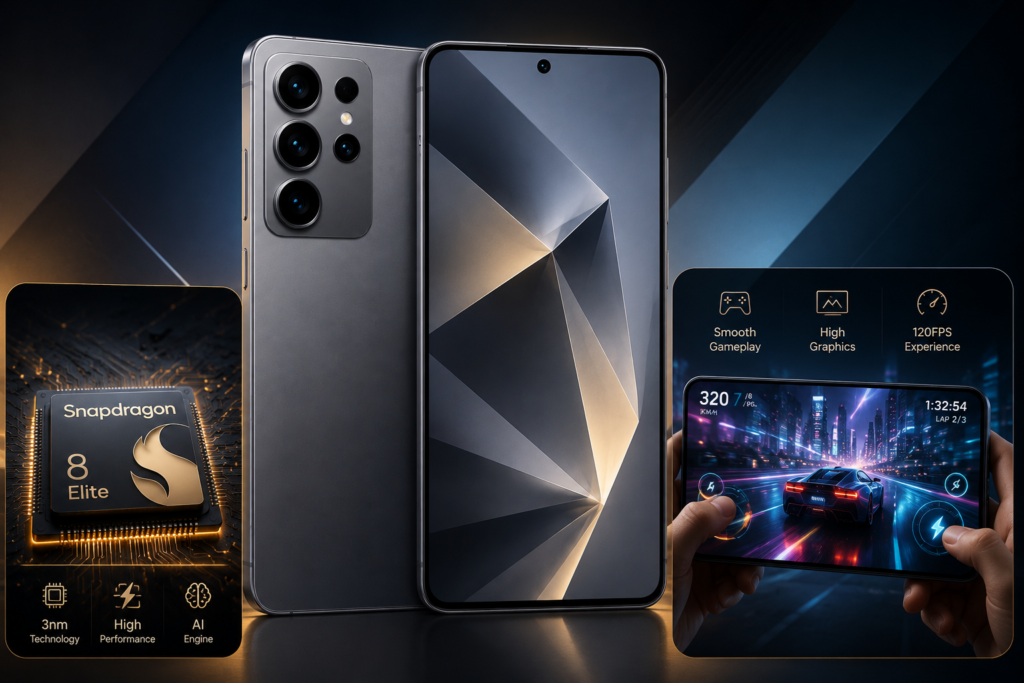
Gaming has become an important part of the flagship smartphone experience. Modern premium phones offer powerful processors, high-refresh-rate displays, advanced cooling systems, large batteries, and software features designed to maintain performance during extended gaming sessions.
OnePlus 15 – Best for Gaming
The OnePlus 15 is one of the strongest choices for users who primarily care about mobile gaming.
Its combination of flagship processing hardware, a high-refresh-rate display, fast response, and performance focused optimization makes it suitable for demanding games.
Gamers who play titles such as competitive shooters, racing games, and graphics-intensive RPGs can benefit from the phone’s performance-oriented design.
Samsung Galaxy S26 Ultra – Best All-Round Gaming Flagship
The Galaxy S26 Ultra is also an excellent gaming smartphone because it combines powerful flagship hardware with a large, high-resolution AMOLED display.
Its large screen provides more comfortable viewing during gaming, while the powerful processor is capable of handling demanding titles.
The Galaxy S26 Ultra is especially suitable for users who want one smartphone for gaming, photography, productivity, and everyday use.
iPhone 17 Pro Max – Best for iOS Gaming
The iPhone 17 Pro Max offers excellent gaming performance through Apple’s A19 Pro chip and hardware-accelerated graphics capabilities.
Its powerful hardware and optimized iOS ecosystem make it a strong choice for gamers who prefer Apple’s platform.
Xiaomi 16 Ultra – Powerful Gaming and Multimedia Experience
The Xiaomi 16 Ultra combines flagship-level processing with a large premium display, making it another capable option for mobile gaming.
It is particularly appealing to users who want strong gaming performance without giving up advanced camera capabilities.
Gaming Verdict
Best Gaming Phone: OnePlus 15
Best All-Round Flagship for Gaming: Samsung Galaxy S26 Ultra
Best iPhone for Gaming: iPhone 17 Pro Max
Best Gaming + Camera Combination: Xiaomi 16 Ultra
AI Features Comparison: Which Smartphone Has the Best AI?
Artificial intelligence has become one of the biggest smartphone trends in 2026. Modern flagship phones use AI for photography, writing, translation, search, productivity, personalization, and everyday assistance.
However, different manufacturers approach smartphone AI differently.
Samsung Galaxy S26 Ultra – Best Overall AI Experience
Samsung has integrated Galaxy AI deeply into the Galaxy S26 Ultra. AI-powered tools can assist with photography, productivity, communication, and everyday tasks.
The phone’s dedicated processing hardware also helps it handle demanding AI workloads directly on the device.
For users who want a broad selection of AI tools combined with a premium Android experience, the Galaxy S26 Ultra is one of the strongest choices.
Google Pixel 11 Pro XL – Best for AI-Powered Photography
Google’s Pixel series has traditionally placed a strong emphasis on computational photography and AI.
The Pixel 11 Pro XL continues this approach by combining Google’s AI technology with its camera and Android ecosystem.
This makes it particularly attractive to users who want AI-assisted photo editing, smart photography tools, and intelligent software features.
iPhone 17 Pro Max – Best AI Experience for Apple Users
Apple integrates Apple Intelligence into supported iPhone experiences, bringing AI capabilities to writing, communication, image-related tasks, and other everyday functions.
For users already invested in Apple’s ecosystem, the iPhone 17 Pro Max provides a convenient way to access these AI features alongside Apple’s hardware and software.
OnePlus 15 – AI and Productivity Features
OnePlus also incorporates AI-powered features into its software experience. These tools can assist with productivity and everyday smartphone tasks while working alongside the phone’s powerful hardware.
The OnePlus 15 is therefore a good option for users who want a combination of fast performance, gaming capabilities, and modern AI features.
AI Features Verdict
Best Overall AI Experience: Samsung Galaxy S26 Ultra
Best AI Photography: Google Pixel 11 Pro XL
Best AI Experience for Apple Users: iPhone 17 Pro Max
Best AI + Performance Combination OnePlus 15
Buying Guide: How to Choose the Best Smartphone in 2026
Choosing the best smartphone in 2026 depends on more than simply buying the most expensive flagship. Different users have different priorities, including camera quality, gaming performance, battery life, display quality, software experience, AI features, and overall value.
Before choosing a smartphone, consider how you actually use your phone and which features matter most to you.
Best Smartphone for Photography
If photography is your main priority, look for a smartphone with a high-quality main sensor, optical image stabilization, capable telephoto cameras, a good ultrawide camera, and strong computational photography.
The Samsung Galaxy S26 Ultra is an excellent all-around option for users who want versatile cameras and powerful zoom capabilities.
The Google Pixel 11 Pro XL is another strong option for users who prefer computational photography and AI-assisted image processing.
Best Smartphone for Gaming
Gamers should prioritize the processor, GPU performance, cooling system, refresh rate, touch response, battery capacity, and sustained performance.
The OnePlus 15 is a strong choice for gaming-focused users, while the Samsung Galaxy S26 Ultra provides a more balanced experience for gaming, photography, productivity, and everyday use.
Best Smartphone for AI Features
AI has become an important part of the modern smartphone experience.
Samsung’s Galaxy AI, Google’s AI-powered Pixel experience, and Apple’s Apple Intelligence provide different approaches to AI.
If AI features are your priority, compare not only the number of AI tools available but also how useful they are in your daily workflow.
Best Smartphone for Battery Life
Users who spend long hours streaming videos, gaming, browsing social media, or working from their phones should prioritize battery capacity and charging speed.
The iPhone 17 Pro Max, Samsung Galaxy S26 Ultra, and OnePlus 15 are strong options for users who want long-lasting flagship performance.
When comparing battery life, don’t look only at the battery capacity. Processor efficiency, display technology, software optimization, and charging speed also affect the overall experience.
Best Smartphone for Performance
If performance is your priority, focus on the processor, RAM, storage technology, thermal management, and software optimization.
The Samsung Galaxy S26 Ultra, iPhone 17 Pro Max, and OnePlus 15 are strong choices for demanding users who frequently multitask, edit content, or play demanding games.
Best Smartphone for Students
Students usually need a phone that provides good battery life, reliable performance, a quality display, good cameras, and long software support.
A premium flagship may be worth considering if you plan to keep the phone for several years. However, users with a limited budget should also consider your Best Smartphones Under $500 in 2026 guide.
Best Smartphone for Professionals
Professionals should prioritize productivity, battery endurance, multitasking, security, software support, connectivity, and reliable performance.
The Samsung Galaxy S26 Ultra is particularly attractive because of its large display, productivity features, AI tools, and S Pen support.
Apple’s iPhone 17 Pro Max is another excellent choice for professionals already using Macs, iPads, Apple Watch, or other Apple products.
Android vs iPhone: Which Is Better in 2026?
Choosing between Android and iPhone ultimately depends on your preferences.
Android offers greater hardware variety, customization, multitasking options, and a wider selection of manufacturers.
The iPhone offers Apple’s tightly integrated hardware and software ecosystem, long-term software support, and strong video capabilities.
Neither platform is automatically better for everyone
Frequently Asked Questions About the Best Smartphones in 2026
Which is the best smartphone in the world in 2026?
There is no single smartphone that is perfect for every user. However, the Samsung Galaxy S26 Ultra is one of the strongest all-around flagship choices because it combines powerful performance, advanced cameras, a premium display, AI features, and productivity tools.
Which phone has the best camera in 2026?
The Samsung Galaxy S26 Ultra is one of the strongest all-around camera phones, while the iPhone 17 Pro Max is particularly attractive for professional video and the Google Pixel 11 Pro XL focuses heavily on computational photography and AI-assisted imaging.
Which smartphone is best for gaming in 2026?
The OnePlus 15 is a strong choice for users who prioritize gaming performance, while the Samsung Galaxy S26 Ultra is a better all-around option for users who want gaming alongside photography, productivity, and everyday features.
Which smartphone has the best AI features?
Samsung Galaxy S26 Ultra, Google Pixel 11 Pro XL, and iPhone 17 Pro Max are among the strongest options for users interested in AI-powered smartphone features.
Is it worth buying a flagship smartphone in 2026?
A flagship can be worth buying if you want premium cameras, high-end performance, better displays, advanced AI features, and long-term software support.
However, users with a limited budget may get better value from a mid-range smartphone.
What should I check before buying a smartphone?
Before purchasing, compare:
- Processor performance
- RAM and storage
- Camera quality
- Display technology
- Battery capacity
- Charging speed
- Software support
- AI features
- Build quality
- Price and value
Final Verdict: Best Smartphones in the World 2026
Choosing the best smartphone in 2026 is no longer simply about finding the phone with the fastest processor or the highest megapixel camera. The best choice depends on how you use your smartphone and which features matter most to you.
After comparing flagship smartphones across performance, cameras, display quality, battery life, gaming, AI features, software experience, and overall usability, each device has its own strengths.
Samsung Galaxy S26 Ultra – Best Overall Smartphone
The Samsung Galaxy S26 Ultra is our top overall recommendation for users who want a premium Android flagship that can handle almost everything.
It combines a high-resolution AMOLED display, powerful flagship performance, an advanced multi-camera system, Galaxy AI features, S Pen support, and a large battery.
It is particularly suitable for photographers, professionals, gamers, content creators, and users who want a smartphone that can replace several productivity and entertainment devices.
Best for: Overall flagship experience, photography, productivity, AI, and Android users.
iPhone 17 Pro Max – Best for Apple Users
The iPhone 17 Pro Max is one of the best choices for users who prefer Apple’s ecosystem.
Its powerful A19 Pro chip, advanced Pro camera system, large OLED display, long battery life, and professional video capabilities make it particularly attractive to content creators and professionals.
Users who already own a Mac, iPad, Apple Watch, or other Apple products may also benefit from the seamless integration between devices.
Best for: iOS users, video creators, professionals, and Apple ecosystem users.
Google Pixel 11 Pro XL – Best for AI and Photography
The Google Pixel 11 Pro XL is a strong choice for people who want a smart Android experience with a strong focus on AI and computational photography.
Google’s approach focuses heavily on software processing, AI-powered tools, photography enhancement, and intelligent everyday features.
It is especially attractive to users who want excellent photography without having to manually adjust every camera setting.
Best for: AI features, computational photography, and Google’s Android experience.
OnePlus 15 – Best for Performance and Gaming
The OnePlus 15 is an excellent choice for users who prioritize speed and gaming.
Its performance-focused hardware and smooth display experience make it suitable for demanding games, multitasking, and users who expect fast application performance.
It is also a strong option for people who want flagship-level performance without choosing a phone primarily for photography.
Best for: Gaming, performance, multitasking, and fast everyday use.
Xiaomi 16 Ultra – Best for Camera Enthusiasts
The Xiaomi 16 Ultra is aimed at users who want a premium smartphone with a strong emphasis on photography while still providing flagship-level performance.
It is particularly appealing to photography enthusiasts who want advanced camera hardware and a premium smartphone experience in the same device.
Best for: Photography enthusiasts, multimedia and flagship performance.
OPPO Reno15 Pro – Best for Stylish Everyday Use
The OPPO Reno15 Pro is a good option for users who value a combination of design, camera capabilities, display quality, and everyday usability.
Rather than focusing only on raw performance, the Reno series generally targets users who want a balanced smartphone experience with a premium-looking design.
Best for: Everyday photography, design-conscious users, and general smartphone use.
Which Smartphone Should You Buy?
If you are still unsure which smartphone is right for you, use the following quick guide
| Your Priority | Recommended Smartphone |
|---|---|
| Best Overall | Samsung Galaxy S26 Ultra |
| Best iPhone | iPhone 17 Pro Max |
| Best AI Experience | Google Pixel 11 Pro XL |
| Best Gaming | OnePlus 15 |
| Best Camera Experience | Samsung Galaxy S26 Ultra |
| Best Professional Video | iPhone 17 Pro Max |
| Best Android Experience | Samsung Galaxy S26 Ultra |
| Best Performance | Samsung Galaxy S26 Ultra / OnePlus 15 |
| Best for Photography Enthusiasts | Xiaomi 16 Ultra |
| Best Budget Alternative | Best Smartphones Under $500 in 2026 |
Final Recommendation
If you want one smartphone that does almost everything extremely well, the Samsung Galaxy S26 Ultra is the easiest recommendation from this comparison.
For users who prefer iOS, the iPhone 17 Pro Max offers an excellent combination of performance, cameras, video capabilities, battery life, and Apple’s ecosystem.
If AI and computational photography are your biggest priorities, the Google Pixel 11 Pro XL deserves serious consideration.
For gaming and high-performance Android use, the OnePlus 15 is an excellent alternative.
Meanwhile, photography enthusiasts should also consider the Xiaomi 16 Ultra, particularly if camera hardware is one of the most important factors in their buying decision.
Ultimately, there is no universal winner. The right smartphone is the one that matches your budget, operating-system preference, camera requirements, gaming needs, battery expectations, and everyday usage.
Before making your final purchase, compare the latest Price, storage configuration, regional availability, warranty, and official specifications for your country. Smartphone prices and configurations can vary significantly between markets.
Final Quick Picks
- Best Overall: Samsung Galaxy S26 Ultra
- Best iPhone: iPhone 17 Pro Max
- Best AI: Google Pixel 11 Pro XL
- Best Gaming: OnePlus 15
- Best Camera: Samsung Galaxy S26 Ultra
- Best Video: iPhone 17 Pro Max
- Best Performance: Samsung Galaxy S26 Ultra / OnePlus 15
- Best Camera Enthusiast Option: Xiaomi 16 Ultra
There is no single smartphone that wins every category. However, the Samsung Galaxy S26 Ultra stands out as the most complete all-round flagship for 2026, while Apple’s iPhone 17 Pro Max, Google’s Pixel 11 Pro XL, OnePlus 15, and Xiaomi 16 Ultra offer compelling alternatives for users with different priorities.