Earn
Earn
Introduction
Free AI Tools for Students in 2026 are transforming the way students learn, write, and complete assignments. In today’s digital era, artificial intelligence has become an essential part of modern education.
Students often struggle with homework, research, and time management. However, using the right AI tools can make studying faster, easier, and more efficient. These tools help students understand complex topics, improve writing skills, and stay organized.
In this article, we will explore the Top 5 Free AI Tools for Students in 2026, along with their benefits and tips to use them effectively.
Students can explore many best ai tools for students to improve their study performance.
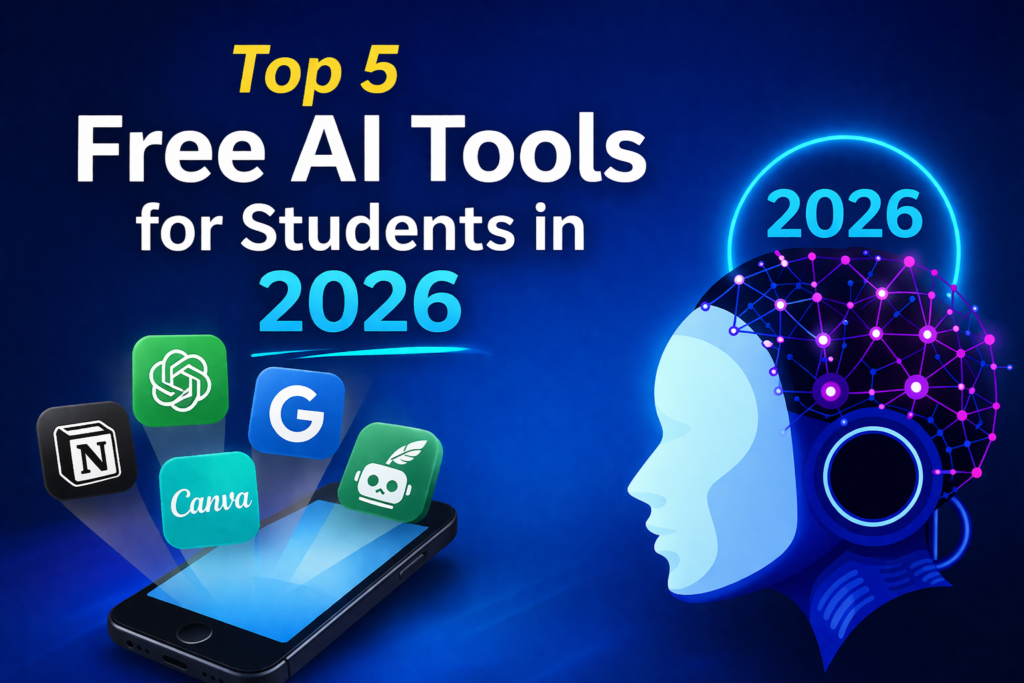
Top 5 Free AI Tools for Students in 2026
1. ChatGPT
ChatGPT is one of the most powerful AI tools for students. It helps generate ideas, explain difficult concepts, and assist with assignments Students can use ChatGPT official website to get instant answers.
✔ Key Features:
- Instant answers to questions
- Easy explanations of complex topics
- Content writing support
👉 Best for: Homework help & research
2. Grammarly
Grammarly is a popular writing assistant that improves grammar, spelling, and sentence clarity Students can improve writing using Grammarly free version
✔ Key Features:
- Real-time grammar correction
- Writing tone suggestions
- Plagiarism checking
👉 Best for: Essays & assignments
3. Notion
Notion is a productivity tool that helps students organize notes, tasks, and study schedules.
✔ Key Features:
- Digital notebook
- Task management
- Study planning
👉 Best for: Organization & productivity
4. Canva
Canva is an easy-to-use design tool that helps create presentations, posters, and graphics.
✔ Key Features:
- Ready-made templates
- Drag-and-drop design
- Presentation tools
👉 Best for: Projects & presentations
5. QuillBot
QuillBot is an AI writing tool that helps students rewrite and improve content.
✔ Key Features:
- Paraphrasing tool
- Grammar checker
- Sentence improvement
👉 Best for: Writing & rewriting
Benefits of Free AI Tools for Students in 2026
Using Free AI Tools for Students in 2026 provides many advantages:
✔ Time Saving: AI tools quickly summarize information and generate ideas
✔ Better Writing: Tools like Grammarly and QuillBot improve writing quality
✔ Improved Productivity: Notion helps manage tasks and schedules
✔ Easy Learning: AI explains difficult topics in simple language
✔ Cost Effective: Most tools offer free versions
Tips to Use AI Tools Effectively
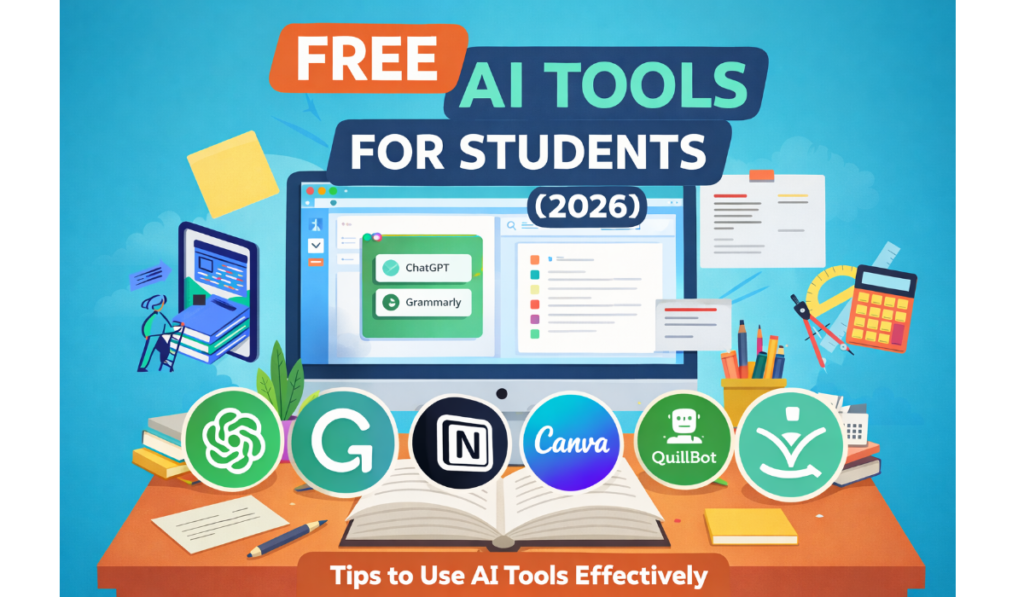
To get the best results from Free AI Tools for Students in 2026, follow these tips:
✔ Use AI as a helper, not a replacement
✔ Always check AI-generated content
✔ Combine multiple tools for better results
✔ Focus on learning and understanding
✔ Avoid copying content directly
👉 Example: Use ChatGPT for ideas, Grammarly for editing, and Canva for presentations.
To improve performance, students should also check best productivity apps for students
Conclusion
Free AI Tools for Students in 2026 are powerful resources that can improve learning, writing, and productivity. Tools like ChatGPT, Grammarly, Notion, Canva, and QuillBot make studying easier and more efficient.
By using these tools wisely, students can save time, improve their academic performance, and develop better study habits. As AI technology continues to grow, students will benefit even more in the future.
FAQs About Free AI Tools for Students in 2026
Q1: What are the best free AI tools for students in 2026?
The best tools include ChatGPT, Grammarly, Notion, Canva, and QuillBot.
Q2: Are AI tools helpful for studying?
Yes, AI tools help students understand topics, improve writing, and manage tasks efficiently.
Q3: Are free AI tools safe?
Most tools are safe if used responsibly. Avoid sharing personal data.
Q4: Can AI tools improve writing?
Yes, tools like Grammarly and QuillBot improve grammar and clarity.