Earn
Earn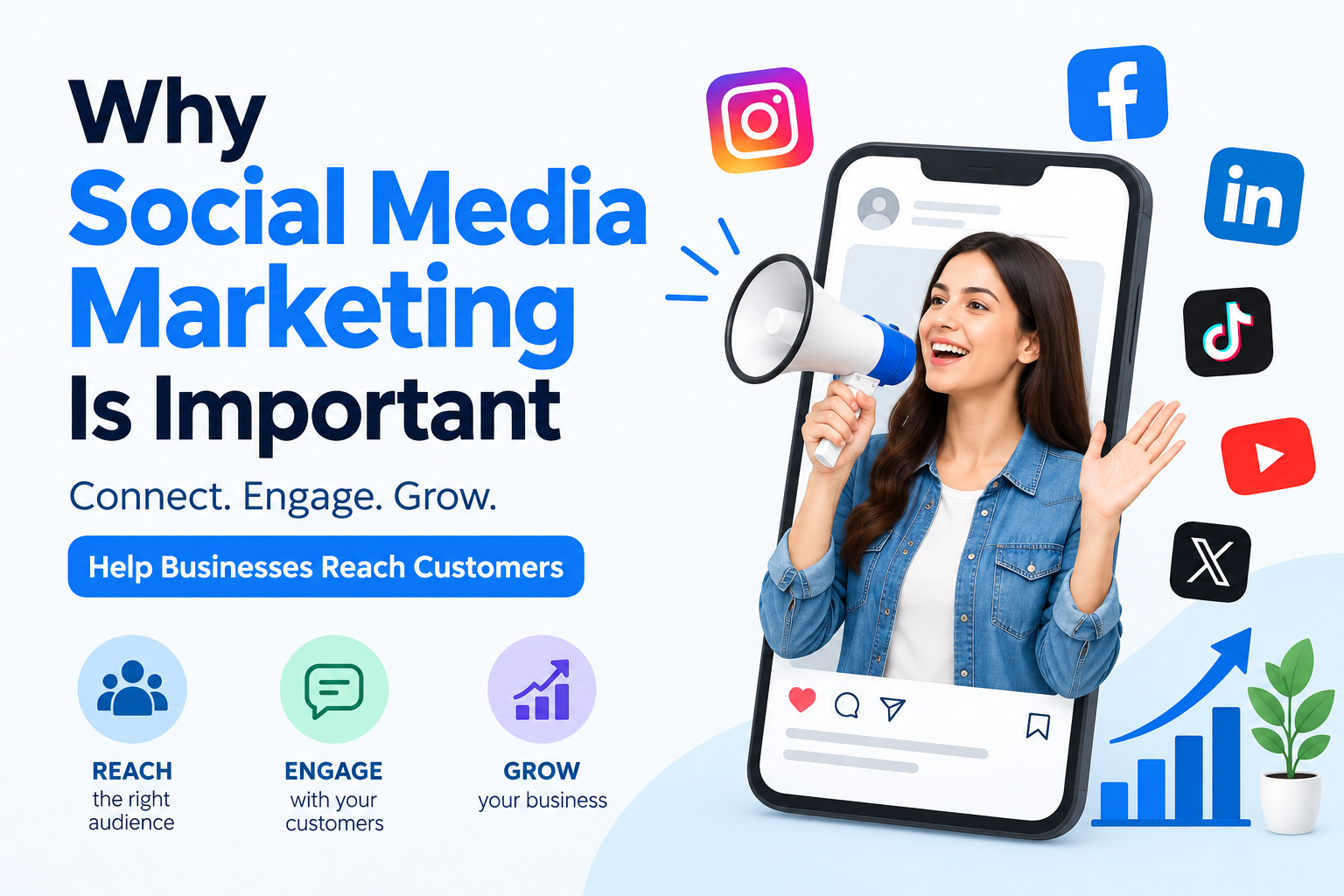
In today’s fast-moving digital world, social media has become an important part of how businesses communicate with customers, promote their products and services, and build their online presence. From small local businesses and startups to large companies, organizations use social media platforms to reach potential customers, share useful content, build brand awareness, and support business growth.
Platforms such as Facebook, Instagram, LinkedIn, TikTok, YouTube, and X give businesses opportunities to communicate directly with their target audiences. Instead of depending only on traditional advertising methods, businesses can use social media to publish educational content, showcase products, answer customer questions, collect feedback, and promote their websites.
Social media marketing is not simply about gaining followers. A successful strategy focuses on reaching the right audience, providing valuable content, building relationships, and achieving measurable business goals.
In this guide, we will explore why social media marketing is important, its major benefits, how businesses can use it effectively, common mistakes to avoid, and practical steps for creating a successful social media marketing strategy in 2026.
What Is Social Media Marketing?
Social media marketing is the process of using social media platforms to promote a business, communicate with customers, distribute content, increase brand visibility, and support marketing goals.
Businesses can use social media for both organic and paid marketing activities. Organic marketing includes regular posts, videos, stories, educational content, discussions, and community engagement. Paid social media marketing involves advertising campaigns designed to reach specific audiences.
The most effective social media strategies combine useful content with clear business objectives. Instead of posting promotional messages constantly, businesses should provide information that helps their audience solve problems, answer questions, or make better purchasing decisions.
Why Social Media Marketing Is Important
Social media marketing is important because it allows businesses to communicate with their audiences in a direct and flexible way. It can support several areas of digital marketing, including brand awareness, customer engagement, website traffic, lead generation, and sales.
However, social media should not be treated as a guaranteed source of sales or traffic. Results depend on factors such as the target audience, content quality, platform, consistency, competition, budget, and overall marketing strategy.
Here are some of the major reasons businesses use social media marketing.
Reaches a Large and Diverse Audience
One of the biggest advantages of social media marketing is its ability to reach a wide range of people.
Traditional marketing can sometimes be limited by geography, advertising costs, or the size of a company’s existing audience. Social media gives businesses an opportunity to introduce their products, services, and content to people outside their immediate local area.
For example, a small online business can use social media to reach customers in different cities or countries. A technology company can share product information with users interested in smartphones, artificial intelligence, software, or other technology topics.
Different platforms also attract different types of audiences. LinkedIn can be useful for professional and business-related communication, while Instagram and TikTok can be effective for visual and short-form content.
The key is to choose platforms that match the target audience rather than trying to maintain a presence on every social network.
Cost-Effective Marketing
Social media can provide businesses with flexible marketing options across different budgets.
Creating a business profile and publishing organic content generally does not require an advertising budget. Businesses can share articles, images, videos, product updates, educational posts, and customer-focused content without paying for every post.
Paid advertising provides another option. Businesses can set budgets according to their goals and test different campaigns to determine which audiences and content perform well.
This flexibility can be particularly useful for startups and small businesses that may not have large marketing budgets.
Instead of investing heavily in one advertising channel, a business can start with organic content, measure audience response, and gradually test paid campaigns when appropriate.
Builds Direct Customer Engagement

Social media is more than a broadcasting platform. It gives businesses opportunities to communicate directly with their customers.
Customers can comment on posts, send messages, ask questions, share opinions, and provide feedback. Businesses can respond to these interactions and create stronger relationships with their audiences.
For example, if a customer asks about a product’s features, a helpful response can answer the question while also providing useful information to other people who may have the same concern.
Businesses can also use polls, questions, discussions, and interactive content to understand their audiences better.
Consistent and professional communication can make a business appear more accessible and responsive.
Increases Brand Awareness
Brand awareness refers to how familiar people are with a business or brand.
Social media can help businesses increase brand visibility by consistently sharing useful and recognizable content. A business can use its social profiles to communicate its products, services, expertise, values, and personality.
Content such as educational posts, product demonstrations, behind-the-scenes videos, customer stories, and industry updates can help keep a brand visible to its audience.
However, consistency is more important than simply posting as frequently as possible. Businesses should focus on publishing useful content that is relevant to their target audience.
Over time, consistent exposure can help audiences become more familiar with a brand.
Provides Valuable Audience Insights
Many social media platforms provide analytics and performance information that can help businesses understand their audiences.
Depending on the platform, businesses may be able to analyze:
- Post engagement
- Video views
- Shares and comments
- Profile visits
- Link clicks
- Audience demographics
- Content performance
- Follower growth
- Advertising results
These insights can help marketers identify which types of content attract attention and which topics receive less engagement.
For example, if educational videos consistently perform better than promotional posts, a business may decide to create more educational content.
Using performance data allows businesses to make more informed marketing decisions instead of relying entirely on assumptions.
Drives Website Traffic
Social media can also help businesses introduce their websites and online resources to new audiences.
Businesses can share links to blog posts, product pages, guides, landing pages, and other useful resources. When users find the content relevant, they may visit the website to learn more.
For content-driven websites, social media can be especially useful for distributing new articles and bringing existing content to the attention of interested audiences.
For example, a technology website can publish an article about smartphones and then share useful information from that article on social platforms. Interested users may then visit the website to read the complete guide.
Social media should therefore be viewed as one part of a broader digital marketing strategy rather than a replacement for SEO.
Supports Sales and Conversions
Social media can support the customer journey from discovery to purchase.
Businesses can use social platforms to showcase products, explain their features, answer questions, share demonstrations, and direct interested customers to product pages or online stores.
Some platforms also provide commerce and shopping features that can make it easier for customers to discover products.
Service-based businesses can use social media to generate inquiries and leads. For example, a consultant, agency, or local service provider can use social content to demonstrate expertise and encourage potential customers to contact the business.
However, businesses should avoid making every post a sales pitch. Educational and informative content can help build interest and trust before a customer is ready to make a purchase.
Builds Trust and Credibility
Trust is an important part of online business.
Customers may want to learn more about a company before purchasing a product or service. An active and professional social media presence can provide additional information about the business.
Businesses can build credibility by:
- Sharing useful and accurate information
- Responding professionally to questions
- Providing clear product details
- Sharing customer experiences
- Publishing educational content
- Addressing concerns responsibly
- Maintaining consistent communication
Businesses should also avoid misleading claims and exaggerated promises.
A trustworthy social media presence can help customers feel more comfortable interacting with a brand.
Helps Businesses Understand Competitors
Social media can provide businesses with publicly available information about competitors and industry trends.
Businesses can observe the types of content competitors publish, the topics they discuss, the questions customers ask, and the ways audiences respond.
The purpose should not be to copy competitors. Instead, this information can help businesses identify opportunities to create more useful, original, and differentiated content.
For example, if customers frequently ask questions about a particular topic that competitors do not explain clearly, a business can create a detailed guide that addresses those questions.
Supports Content Marketing
Social media and content marketing can work together effectively.
A single detailed article can be transformed into multiple pieces of social content. For example, a business can turn an article into:
- Short educational posts
- Infographics
- Short-form videos
- Social media tips
- Question-and-answer posts
- Statistics and key points
- Carousel posts
This approach allows businesses to distribute their existing content in different formats.
For websites and blogs, social media can also help introduce useful articles to people who may be interested in the subject.
Helps Build an Online Community
Successful social media marketing is not only about increasing follower numbers. It can also help businesses build communities around shared interests.
Businesses can encourage community engagement by asking questions, responding to comments, sharing useful information, and creating discussions related to their industry.
For example, a technology brand can create discussions about smartphones, artificial intelligence, smart home technology, or emerging digital trends.
A community-focused approach can create ongoing interactions between a brand and its audience.
Provides Valuable Customer Feedback
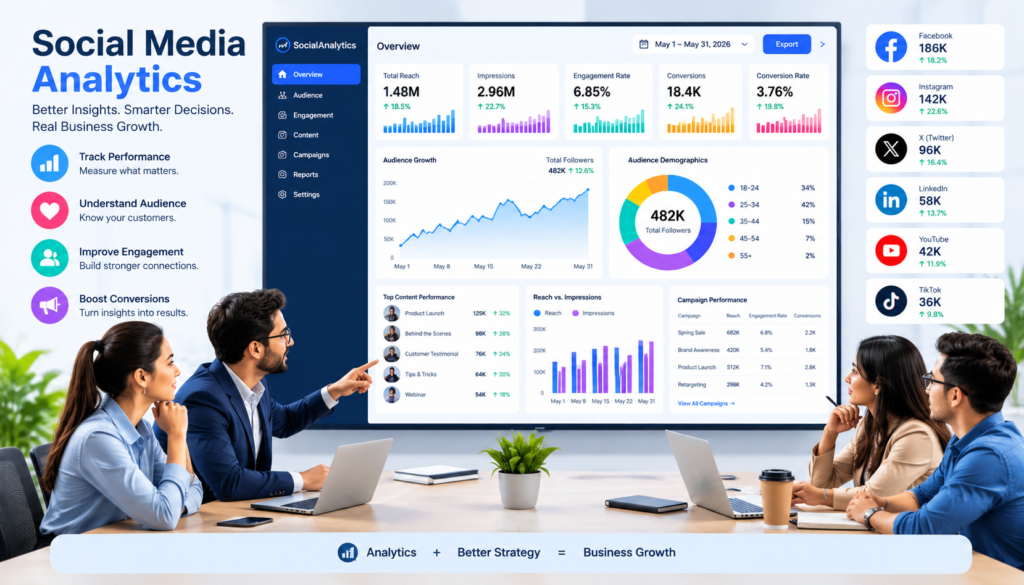
Many social media platforms provide analytics and performance information that can help businesses understand their audiences.
Social media gives customers an easy way to share opinions.
Comments, direct messages, reviews, and discussions can reveal what customers like, what they find confusing, and what they want from a business.
Businesses can use this feedback to improve their products, services, customer support, and content.
For example, if several customers ask the same question about a product, the business could create a detailed guide or FAQ addressing that question.
In this way, social media can serve as both a marketing channel and a source of customer insights.
How to Create an Effective Social Media Marketing Strategy
A successful social media strategy starts with clear goals and a good understanding of the target audience.
1. Identify Your Target Audience
Determine who you want to reach. Consider factors such as age, location, interests, needs, and purchasing behavior.
2. Choose the Right Platforms
You do not need to use every social media platform. Select the platforms where your target audience is most relevant to your business.
3. Set Clear Goals
Your goals could include increasing brand awareness, generating website traffic, improving engagement, generating leads, or supporting sales.
4. Create Valuable Content
Focus on content that educates, informs, entertains, or solves problems. Avoid making every post purely promotional.
5. Maintain Consistency
Create a realistic publishing schedule that your business can maintain over time. Consistency is generally more useful than publishing a large amount of content for a short period.
6. Engage With Your Audience
Respond to relevant comments and messages. Encourage discussions and pay attention to customer questions.
7. Monitor Performance
Review analytics regularly to understand which content performs well. Use those insights to improve future content.
Common Social Media Marketing Mistakes to Avoid
Businesses can reduce the effectiveness of their social media strategy by making several common mistakes.
Posting Without a Strategy
Publishing random content without a clear objective can make it difficult to measure results.
Focusing Only on Sales
If every post asks customers to buy something, audiences may lose interest. A balanced content strategy should include educational and useful information.
Ignoring Customer Questions
Failing to respond to relevant questions or comments can create a poor customer experience.
Copying Competitors
Businesses should study competitors but create original content that provides their own perspective and value.
Ignoring Analytics
Without reviewing performance data, businesses may continue spending time on content that does not effectively support their goals.
Trying to Use Every Platform
Managing too many platforms can reduce content quality and consistency. It is often more practical to focus on the platforms that matter most to the target audience.
Frequently Asked Questions
Why is social media marketing important for businesses?
Social media marketing is important because it helps businesses reach audiences, build brand awareness, communicate with customers, distribute content, collect feedback, and support marketing and sales goals.
Is social media marketing useful for small businesses?
Yes. Social media can give small businesses opportunities to build an online presence, communicate directly with customers, promote useful content, and reach potential customers without relying entirely on traditional advertising.
Can social media marketing increase website traffic?
Social media can contribute to website traffic when businesses share useful and relevant content that encourages users to visit their websites. However, traffic results vary depending on the audience, platform, content, and strategy.
Is social media marketing free?
Organic social media activities can generally be performed without an advertising budget, while paid advertising requires a budget. Businesses can choose between organic content, paid campaigns, or a combination of both.
Which social media platform is best for marketing?
There is no single platform that is best for every business. The right platform depends on the target audience, business type, content format, and marketing goals.
How often should a business post on social media?
There is no universal posting frequency that works for every business. A consistent and realistic schedule is generally more useful than publishing content simply to increase the number of posts.
Conclusion
Social media marketing has become an important part of modern digital marketing. It gives businesses opportunities to reach new audiences, increase brand awareness, communicate with customers, distribute useful content, understand audience behavior, and support sales and lead generation.
However, successful social media marketing is not simply about collecting followers or publishing promotional posts. Businesses need to understand their audiences, choose appropriate platforms, create useful content, communicate professionally, and regularly review performance.
For small businesses, startups, online stores, service providers, and established companies, social media can be an important part of a broader digital strategy.
When social media marketing is combined with quality content, a well-structured website, SEO, and a clear business strategy, it can help create a stronger and more sustainable online presence.
The key is to focus on value, consistency, relevance, and genuine communication rather than simply chasing likes and followers.